IROS 2026 · Pittsburgh · 折紙 · First Edition

The Robotic Origami Challenge

A competition benchmarking dexterous robotic hands on fine-motor, sequential paper manipulation — against expert artists from the Nippon Origami Association (日本折紙協会).

Sep 27 — Oct 1, 2026 · David L. Lawrence Convention Center · Pittsburgh, PA

Fold a paper airplane. One figure, every team.

Traditional kami hikōki — a classic 4–6 fold airplane curated by the Nippon Origami Association (日本折紙協会).

Target figure A traditional paper airplane — the target figure for IROS 2026
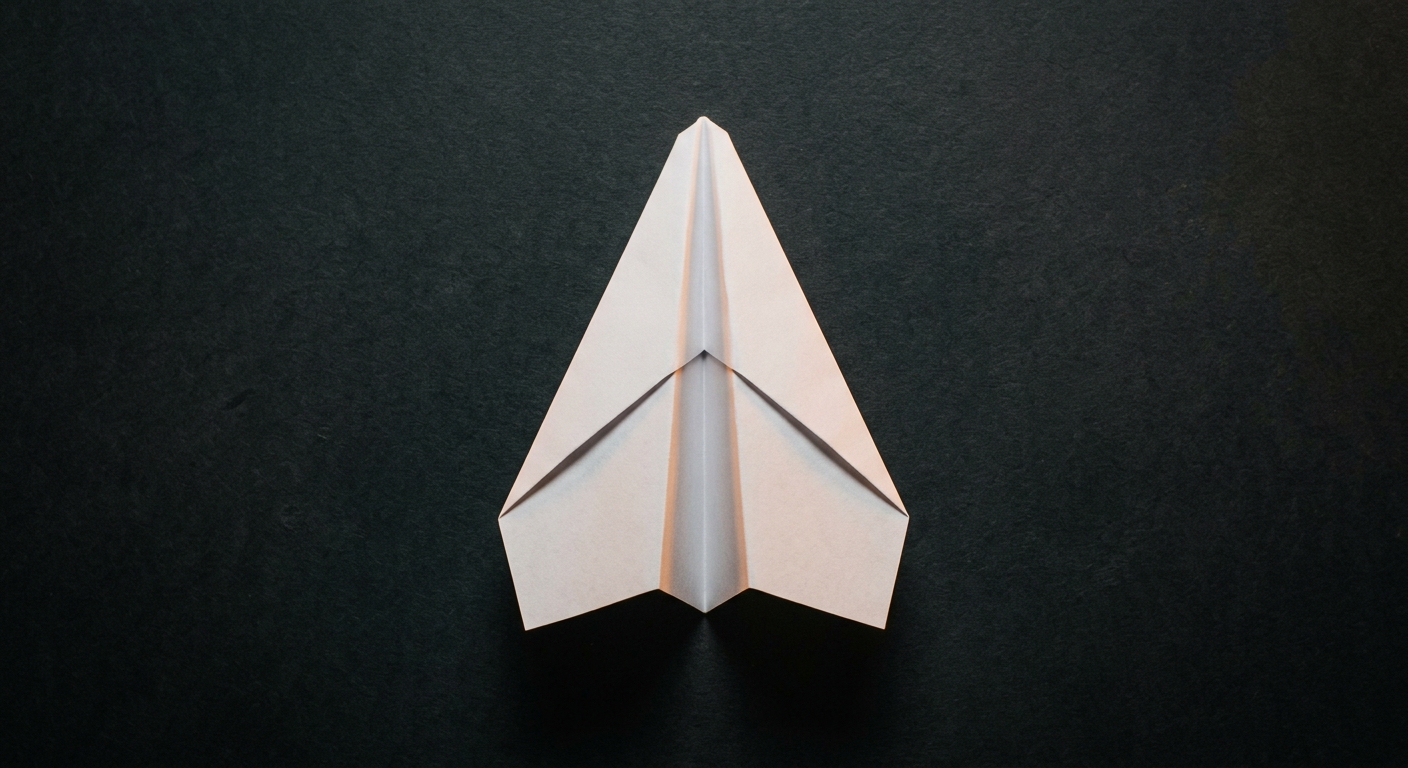
紙飛行機 · kami hikōki

The Paper Airplane

A traditional Japanese paper airplane — 4 to 6 folds depending on the variant chosen by the team. Judged on crease accuracy, structural fidelity, symmetry, and paper integrity.

Default paper
15 × 15 cm
Default weight
≥ 60 gsm
Folds
4 — 6
Scored on
Folding time
The Rules

Judged by an Origami Grand Master from the Nippon Origami Association. Their craft is the rubric.

Success / Failed
Pass or fail
The judge panel declares whether you folded a recognizable airplane.
Time limit
10 min/attempt
Exceeding the limit is an automatic fail.
Judged by
Origami Grand Master
From the Nippon Origami Association (日本折紙協会).
Scoring criterion
Folding time
Faster successful folds rank higher.

And if the plane actually flies — extra points.

What we provide to every team.

Three things, released to all registered teams — so the barrier to entry is policy, not logistics.

01 · 資料

Teleop datasets

500+ episodes of teleoperation demonstrations collected on the target folding sequence.

  • Human teleoperation demonstrations (500+ episodes)
  • Fold-sequence diagrams
  • Reference example folds
02 · 模擬

Simulation environment

A high-fidelity sim built on NVIDIA Isaac Sim, with the paper physics and hand kinematics you need to train a folding policy end-to-end.

  • Thin-shell paper physics with plastic creasing and fold memory
  • Digital twins of every partner robotic hand
  • Representative paper-airplane task setups
  • Same scoring rubric as the live event
Released ahead of the event · standardised across all teams.
03 · 評価

Real-World Eval

Sharpa Hands

A remote real-world lab where teams upload policies and run them on the same arms + Sharpa Hands rig that ships to Pittsburgh.

  • Bimanual arms paired with Sharpa Hands dexterous end-effectors
  • Identical rig in sim, remote eval, and on-site
  • Upload a policy, queue an eval, get scored
  • Lowers the barrier — no shipping robots to Pittsburgh
Bookable through the team portal ahead of the event.

The organizing committee.

A coalition across robotics labs, simulation, and origami practice — assembled to make a fair, reproducible, well-judged competition.

08 Co-organizers

Made possible by.

Host
BitRobot
Human Experts
Nippon Origami Association (日本折紙協会)
Hardware
Sharpa Hands
Simulation
Lightwheel

Frequently asked.

What exactly do we fold?
A traditional Japanese paper airplane (kami hikōki), 4 to 6 folds depending on the variant. Every team folds the same target figure.
How is scoring calculated?
An Origami Grand Master from the Nippon Origami Association judges each attempt as a successful fold or a failed one, then ranks the successful submissions by folding time — faster successful folds rank higher. Each attempt is capped at 10 minutes. The plane actually flying is a bonus, not part of the formal rubric.
Do I need to bring my own robotic hand?
No. The competition provides a standardized rig — bimanual arms paired with Sharpa Hands — both in the remote eval lab and on-site at IROS.
When does registration open?
Early 2026. Complete the form below — we'll notify you when registration opens, alongside sim and remote-lab access.
Can I train in simulation first?
Yes. Registered teams receive the Lightwheel simulation environment ahead of the event, with paper-deformation physics, digital twins of partner hands, and the exact scoring rubric.
Is there a remote evaluation option?
Yes. Upload policies to our remote lab for real-world inference on the same arms + Sharpa Hands rig that will be on the IROS floor — without shipping robots to Pittsburgh.
Who judges?
A mixed panel of Nippon Origami Association (日本折紙協会) representatives and robotics researchers.
Open to industry teams?
Yes — academic and industrial teams alike. We expect strong representation from groups developing next-gen dexterous hands and manipulation policies.
How can I partner or sponsor?
Reach out below. We're particularly interested in additional dexterous-hand platforms and judging-rubric contributors.

Be the first to fold.

Registration opens soon

Complete the form and we'll notify you when everything goes live — sim, remote lab, registration.

Tell us about your team. We'll be in touch with simulation access, the figure spec, and the call-for-teams when it opens.

Open the form →
emailorganizers@robotic-origami-challenge.org
updates@RoboticOrigami
presspress@robotic-origami-challenge.org